
Индекс температуры и влажности THI: прогноз и управление тепловым стрессом у молочных коров
Одно число — индекс температуры и влажности — превращает показатели воздуха в понятный вердикт о тепловом стрессе с порогами, доступными любой ферме.
Преимущества
- THI ниже 72 означает зону теплового комфорта
- При THI 75–78 терморегуляция ещё справляется, но запаса нет
- Выше 78 организм не удерживает нормальную температуру — вмешательство обязательно
Полный текст
Ниже приведён полный текст на английском языке (из базы исследований YEARAN). Заголовок, аннотация и выводы переведены, основной текст оставлен в оригинале для точности данных.
Journal: Veterinarija ir Zootechnika, 2020, Vol. 78 (100), pp. 74–79
Article type: Review · Open Access
Authors: Dimo Dimov1, Toncho Penev1*, Ivaylo Marinov2
Affiliation: 1Department of Applied Ecology and Animal Hygiene, Faculty of Agriculture, Trakia University, Bulgaria · 2Department of Animal Husbandry – Ruminants and Dairy Farming, Faculty of Agriculture, Trakia University, Bulgaria
Correspondence: Toncho Penev, Trakia University, 6000 Stara Zagora, Bulgaria
Timeline: Received 21 April 2020 · Accepted 1 October 2020
Abstract
The growing interest in the thermal comfort of dairy cows is justified, not only in countries located in tropical zones, but also in zones with temperate climate where high ambient temperatures are becoming a problem. The temperature-humidity index (THI) is a value representing the combined effect of air temperature and humidity associated with the level of heat stress. THI values lower than 72 mean that the cow’s body is in favourable environmental conditions and is not subject to heat stress. At THI values of 75 to 78, the animal organism is under heat stress, but the mechanisms of thermoregulation still manage to cope, while at THI over 78 it is assumed that the stress is so high that it is impossible to maintain the thermoregulatory mechanisms or normal body temperature.
Keywords: temperature-humidity index; heat stress; dairy cows
Introduction
Climate change, defined as a long-term imbalance of normal climatic conditions such as temperature, wind and rainfall specific for a particular region, is likely to be one of the major challenges facing humanity this century (Bertocchi et al., 2014). In the course of climate change, it is suggested that, even in regions traditionally characterized by less extreme climatic conditions, cows will face temperatures beyond their “comfort zone” (Brügemann et al., 2012). The growing interest in the thermal comfort of farm animals is justified, not only in countries located in tropical zones, but also in zones with temperate climate where high ambient temperatures are becoming a problem (Segnalini et al., 2013; Nardone et al., 2010). In addition to climate change, the problem of thermal comfort in dairy cows is exacerbated by an increase in their sensitivity to heat stress due to increased milk yield, thereby reducing the temperature threshold at which cows respond by reducing milk yield (Berman, 2005). This is due to the fact that the released metabolic heat increases when the productivity of animals increases.
Heat stress directly and indirectly affects feed intake, cow’s body temperature, metabolic processes, feed utilization efficiency, milk productivity, reproductive function, cow behavior, and disease risk (Kadzere et al., 2002; West, 2003; Jordan, 2003; Cook et al., 2007; Rhoads et al., 2009; Bernabucci et al., 2010).
Most studies of thermal stress in animal husbandry are based on temperature and relative humidity (Igono and Johnson, 1990; Bouraoui et al., 2002; St-Pierre et al., 2003; West, 2003; Correa-Calderon et al., 2004), since data on the amount of thermal radiation received from animals, wind speed and rainfall are not publicly available. On the other hand, temperature and humidity data can be taken from ordinary weather stations located near the site.
Temperature-humidity index
The tolerance of animals to high air temperatures depends on the amount of water vapour in the air as this affects the rate of heat loss by evaporation. For the study of heat stress in animal husbandry, the THI is a commonly used bioclimatic index (Hahn et al., 2003). Conceptually, it is difficult to determine whether the THI is best suited to measure the heat stress in dairy cows. Other indices are also formulated empirically and often without reference to the body temperature of cattle. Nevertheless, the original THI and several variations of it have been widely used to assess the degree of heat stress in dairy cows (Mader et al., 2006; Bohmanova et al., 2007; Morton et al., 2007). The temperature-humidity index is expressed as a single value representing the combined effect of air temperature and humidity, which is usually used to estimate the degree of thermal discomfort in dairy cows (Armstrong, 1994). Different species of animals and humans, on the other hand, have different sensitivity to ambient temperature and humidity (Yousef, 1985).
Initially, this index was used only for humans (Thom, 1959), but it was quickly adopted and began to be used in different species of animals (Lendelova and Botto, 2011). Over the last 50 years, this index has undergone numerous modifications in terms of the measurement range to respond adequately to the level of heat stress in dairy cows. There is a significant difference between perceptions of human and cattle in particular. This also applies with respect to the THI. The different variants of this index rely on different weights of the individual components included in its determination. For example, in humans the effect of a temperature measured with a wet thermometer on comfort is almost 6 times greater than that measured with a dry thermometer, whereas in cattle this effect is only about twice as large. This difference is reflected in the evaporation capacity. Humans can dissipate about 190% of their metabolic heat by evaporation, while cattle can dissipate only 105% (Bianca, 1962). According to Collier et al. (2006), this index is used to evaluate the environmental conditions that affect animals. The disadvantage of this index according to the authors is that it does not include the influence of solar radiation. Mahdy et al. (2014), however, consider this index to be one of the most important indicators showing the overall comfort of dairy cows. According to them, the THI is a good tool for determining the occurrence of heat stress.
When dairy cows are subjected to heat stress, they respond by increasing respiration rate and rectal temperature (Omar et al., 1996); in addition, panting, slowed heart rate, and profuse sweating are observed (Blazquez et al., 1994) as well as reduced feed intake (National Research Council, 1989), all of which lead to reduced milk production (Abdel-Bary et al., 1992). Heat stress is associated with several important changes in the behaviour of cattle. When the air temperature is increased from 25 to 40 °C, feed intake is decreased by 46%, rumination is decreased by 22%, standing is increased by 34%, drinking is increased by 30% and locomotion activity is decreased by 19% (Tapki and Sahin, 2006). In dairy cows subjected to heat stress, changes in milk composition, somatic cells count and mastitis incidence have been observed (Du Preez et al., 1990). Studies also show that levels of thyroid hormones and cortisol are affected by heat stress (Wise et al., 1988; Muller et al., 1994). Decreased dry matter intake and subsequent decline in milk productivity are signs of heat stress in lactating cows (Beede and Collier, 1986). Under heat stress, metabolic acidosis and metabolic alkalosis associated with bicarbonates are observed, as well as respiratory acidosis and respiratory alkalosis associated with partial pressure of carbon dioxide (CO2) (Dale and Brody, 1954). Heat stress increases the partial pressure of oxygen in the blood (O2) due to increased alveolar ventilation (Hales and Findlay, 1968) and urinary creatinine concentrations (Thompson, 1973), suggesting muscle catabolism. Mitra et al. (1972) found that the plasma concentration of growth hormone and its rate of secretion decrease at high temperatures (35 °C). Igono et al. (1988) indicate that growth hormone concentrations in the milk of low, medium and high productive cows decrease when the temperature-humidity index exceeds 70 and suggest that this is due to inhibition of growth hormone production in order to reduce production of metabolic heat. McGuire et al. (1991) found that the reduction in plasma concentrations of growth hormone were not observed in cows at thermoneutral conditions, fed with the same one ration under the two different environmental conditions. In an experiment with lactating cows, Johnson et al. (1988) reported a decrease in thyroid hormones triiodothyronine and thyroxine in response to heat stress, which they attributed to attempts to reduce the production of thermal energy in the cow. Earlier, Alvarez and Johnson (1973) reported that in dairy cows exposed to heat stress a higher concentration of epinephrine and norepinephrine into the blood plasma were observed. Heat stress affects both energy and water metabolism (Silanikove, 1992), increasing plasma and extracellular fluid. Cows under heat stress conditions tend to have an increased water content in the rumen, as a result of accelerated rumen exchange of liquid fractions (Silanikove, 1989). Heat stress reduces the mobility of the reticulum and slows down the rumination process (Attenberry and Johnson, 1968). Berman et al. (1985) reported a decrease in thermoregulatory ability under heat stress in dairy cows, which increased seasonal depression in the birth rate (Al-Katanani et al., 1998). Wilson et al. (1998) state that heat stress leads to a decrease in peripheral estradiol-17β concentrations.
Badinga et al. (1993) found that heat stress at the beginning of ovulation reduced the diameter and volume of the dominant follicle. Wolfenson et al. (1997) found that heat stress from day 3 to day 5 of the estrous cycle increased androstenedione and decreased estradiol-17β concentrations in the follicular fluid of the dominant follicle. Hansen and Arechiga (1999) attributed to heat stress physical lethargy, difficulty in detecting oestrus, and a reduction in the number of cows eligible for embryo transfer. In addition, Hansen (1997) reported that heat stress in summer in hot regions was the cause of deteriorating fertility of breeding sires. Ingraham et al. (1974) argued that to optimize conception, heat stress must be minimized at least 12 days before conception. Heat stress also adversely affects the ovum, sperm in the reproductive tract, embryo development, and leads to a change in hormonal balance (Thatcher, 1974).
The THI reports the combined effect of temperature and relative humidity on physiological, productive, etc. indicators in cows. Based on the reported effects of different THI values in dairy cows, a scale was developed representing different zones with THI values associated with different degrees of risk of temperature stress (Fig. 1).
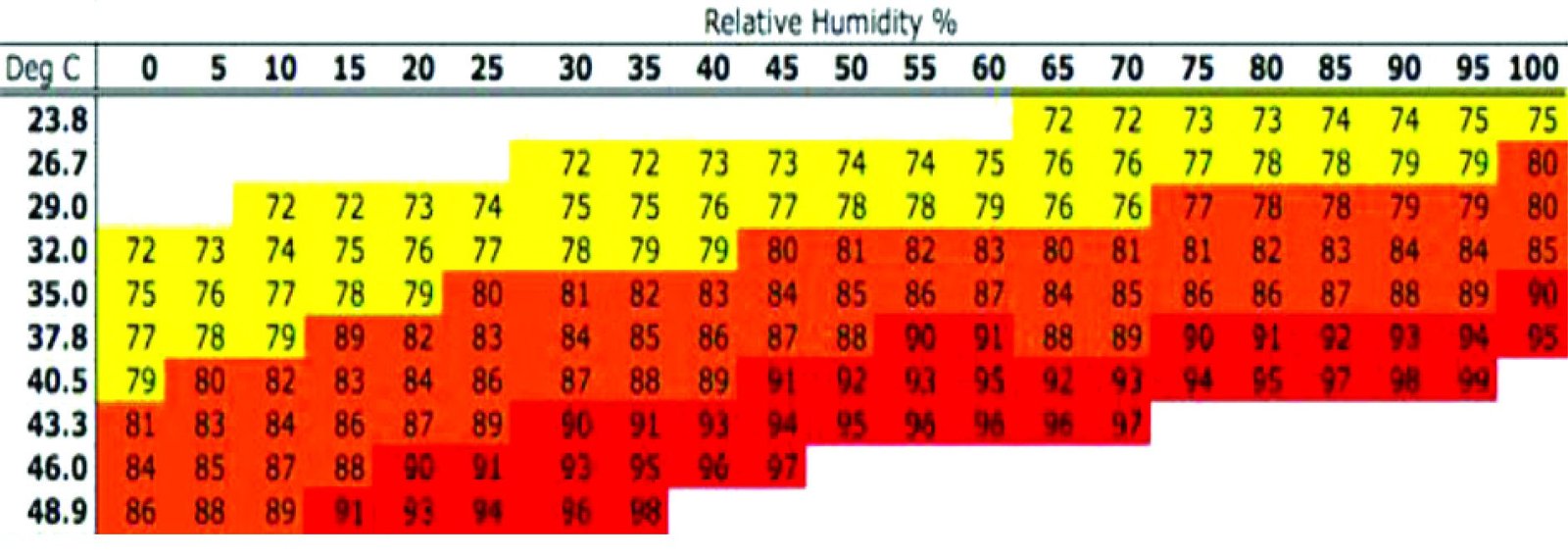 Figure 1. Temperature-humidity index. Colour zones map air temperature against relative humidity to indicate the degree of heat stress risk in dairy cows. Source: Pennington and van der Deven (2010).
Fig. 1 shows that THI values lower than 72 mean that the cow’s body is in favourable environmental conditions and is not subjected to heat stress. At THI values of 75 to 78, the animal organism is under heat stress, but the mechanisms of thermoregulation still manage to cope, while at THI values over 79 it is assumed that the stress is so high that it is impossible to maintain the thermoregulatory mechanisms or normal body temperature. The prevailing view is that milk production begins to decline when THI reaches a value above 72 (this corresponds to a temperature of 25 °C and a humidity of 50%) and this index value is taken as an upper limit (Igono et al., 1992; Ravagnolo et al., 2000). Upadhyay et al. (2009) conclude that high THI values have a negative impact on cow’s milk productivity. The data obtained from the University of Arizona show that high-yielding cows lower their milk yield at the THI value of around 68 (Zimbelman et al., 2009). According to Bouraoui et al. (2002), the productivity of dairy cows is not affected by THI values from 35 to 72, but when raised above these values, the authors found that a decrease in milk protein was observed. Ravagnolo et al. (2000), in their study, found a decrease in the milk yield and milk fat by 0.012 kg and 0.2 kg, respectively, at an increase of the THI with each unit above value of 72, and the time that animals spend in lying and resting is reduced by up to 3 h per day when the THI remains at a value above 72 more than 10 h per day (Cook et al., 2007). According to Bouraoui et al. (2002), an increase in the THI from 68 to 78 leads to a decrease in the daily milk yield per cow by 0.41 kg for each increase of the THI with a unit over 69. Geers et al. (2014) summarize that THI values between 60 and 65 should be taken as the lower limit of heat stress, as above these values an adverse effect on milk productivity and conception rate are being reported. Silanikove (2000) considers that THI values above 80 represent an upper critical limit for the survival of ruminants. Based on a study conducted in Scotland, high THI values influence the quantity and composition of milk produced, depending on whether the cows were housed outdoors or indoors. The intensity of solar radiation also has affected productivity, while moderate winds have helped to mitigate the negative effects of heat stress (Hill and Wall, 2015). In environmental conditions of South Bulgaria in a one-year study, Dimov et al. (2017) found that in the summer season values specific for heat stress occurrence in dairy cows were reported to be average daily above 75. A known risk of such conditions in spring is daily average over 69. The daytime THI averages were highest in the resting area during the summer in all three studied farms with small differences from 73.86 to 74.48, followed by spring season, where variations in daily averages were from 66.79 to 68.85. Keown and Grant (1999) found that the lethal limit for dairy cows starts at 38 °C and a relative air humidity of 80%. According to these authors, even at relatively low air temperatures, cows are under heat stress at a high relative humidity. An air temperature of 31 °C and 40% relative humidity are equivalent to 27 °C and 80% relative humidity (corresponding to THI 78) according to Rao et al. (2014). Vitali et al. (2009) consider that values 77 and 87 should be taken as the upper minimum and upper maximum critical THI values. Above these values, they report increased mortality in cows housed under conditions of an intensive production system. Mader et al. (2006) include both air velocity and solar radiation to THI. The authors found that for each 1 m/s increase in air velocity, the THI decreased by 1.99 units, and when the solar radiation intensity decreased by 100 W/m, the THI decreased by 0.68 units.
Table 1 shows the THI values that indicate the stress levels at which cows respond to and the symptoms observed (Chase, 2006).
| THI | Level of stress | Comments |
|---|---|---|
| < 72 | None | — |
| 72–79 | Mild | Dairy cows will adjust by seeking shade, increasing respiration rate and dilation of blood vessels. The effect on milk production will be minimal. |
| 80–89 | Moderate | Both saliva production and respiration rate will increase. Feed intake may be depressed and water consumption will increase. There will be an increase in body temperature. Milk production and reproduction will be decreased. |
| 90–98 | Severe | Cows will become very uncomfortable due to high body temperature, rapid respiration (panting) and excessive saliva production. Milk production and reproduction will be markedly decreased. |
| > 98 | Danger | Potential cow deaths can occur. |
The author believes that the severity of heat stress is conditioned by many factors, but the key ones are:
- air temperature and humidity;
- the length of time cows are subjected to heat stress;
- the degree of temperature drop during the night to cool animals;
- airflow and ventilation condition;
- the size of the cow, the breed and the colour of the coat;
- availability and accessibility to water.
The sensitivity of cattle to heat stress increases as milk yield increases (Berman, 2005). This is due to the fact that the metabolic heat released increases as the productivity of animals increases. Studies have shown that as milk yield increases from 35 to 45 kg per day, the heat stress threshold decreases by 5 °C (Berman, 2005). Even a slight increase in ambient temperature can cause an increase in the standing time (Smith et al., 2012). Reducing the resting time leads to reduced milk production (Grant, 2007; Bach et al., 2008).
Herbut and Angrecka (2012) recommended the setting of THI values for different zones separately, and not for the entire building, which would make it possible to provide more suitable zones for animals during heat waves. In addition, this will help to determine the requirements for the construction of new buildings with appropriate ventilation systems, both in technical terms and localization of these facilities within the building. Dimov et al. (2017) found significant differences in the values of the THI outdoor and in the rest area of animals in the building. The differences were in the range of 2.38 °C to 0.09 °C, respectively, for spring and winter. This indicates that the semi open free-stall barns for dairy cows, especially the area above the stalls, do not provide comfortable temperature conditions. In reporting the comfort indices, it has been found that the percentage of cows lying in stalls (cow comfort index (CCI)) decreased by 12.45% at values of the THI of ≥ 58 to ≤ 68 to values above 75. More indicative is the SUI (stall usage index, showing how many cows use boxes), which shows that of all cows in the group that are not feeding only 35.43% prefer to lie in stalls at the values of the THI above 75. The rest of cows prefer to stand upright not only in stalls (CCI – 64.98%), but also in other technological zones. In the same study, negative and statistically significant regressions were found between the THI, the CCI and the SUI, which means that an increase in THI values with 1 above 68 would result in a decrease in SUI values of 1.41% and, in the CCI, by 0.84%. An increase in the THI above 68 results in a slight tendency for an increase in the percentage of cows standing upright in stalls. Cows prefer to stay in other zones where they possibly can get cooler (Dimov et al., 2017). Grant et al. (2012) indicate that dairy cows have a strong behavioural need for complete rest. Lactating cows are highly motivated to stand lying for about 12 hours per day (Cook et al., 2005; Drissler et al., 2005; Gomez and Cook, 2010). Cook et al. (2007) noted that when the THI increased from 56 to 74, lying time decreased from 10.9 to 7.9 hours per day, and standing in alleys increased from 2.6 to 4.5 hours per day. Lameness and hoof lesions increased significantly with the extension of time standing upright. Like Collier et al. (2011), they report that cow activity has shifted around THI 68, necessitating the use of more aggressive strategies to reduce heat stress than traditionally used. To solve this problem, it is advisable to provide cooling facilities over the more important areas of the building, additionally to over feeders, stalls or resting areas for cows. To save electricity when using cooling equipment in livestock buildings, they can be set for operation only in periods reaching risky levels of the THI.
Conclusion
Given that global temperature of earth is increasing on an annual basis and the trend is to increase further in the future, heat stress will become a permanent obstacle for dairy cattle farming and not only. Predicting heat stress and responding appropriately and timely to this problem can significantly reduce its negative effects. The temperature-humidity index is an excellent aid to dairy cattle farmers. All the necessary data to determine this index are readily available and no special skills are needed to calculate it, as any farmer could, if desired, get this data and determine the temperature-humidity index for their farm.
References
- Abdel-Bary H.H., Mahmoud M.M., Zaky H.I., Mohamed A.A. Effects of season and month of calving on estrous performance, services conception and milk yield of Friesian cows in Egypt. Egypt. J. Anim. Prod. 1992, 29 (2): 229–253.
- Al-Katanani Y.M., Webb D.W., Hansen P.J. Factors affecting seasonal variation in non-return of lactating dairy cows. J. Dairy Sci. 1998, 81: (Suppl), 217, Abstract.
- Alvarez M.B., Johnson H.D. Environmental heat exposure on cattle plasma catecholamine and glucocorticoids. J. Dairy Sci. 1973, 56: 189–194.
- Armstrong D.V. Heat stress interaction with shade and cooling. J. Dairy Sci., 1994, 7: 2044–2050.
- Attenberry J.T., Johnson H.D. Effect of environmental temperature, controlled feeding and fasting on rumen motility. J. Anim. Sci. 1968, 29: 734–737.
- Bach A., Valls N., Solans A. and Torrent T. Associations between nondietary factors and dairy herd performance. J. Dairy Sci., 2008, 91: 3259–3267.
- Badinga L., Thatcher W.W., Diaz T., Drost M., Wolfenson D. Effect of environmental heat stress on follicular development and steroidogenesis in lactating Holstein cows. Theriogenology 1993, 39: 797–810.
- Beede D.K., Collier R.J. Potential nutritional strategies for intensively managed cattle during thermal stress, J. Anim. Sci. 1986, 62: 543–554.
- Berman A.J. Estimates of heat stress relief needs for Holstein dairy cows. J. Anim. Sci. 2005, 83: 1377–1384.
- Berman A., Folman Y.M., Kaim M., Mamen Z., Herz D., Wolfenson A., Graber Y. Upper critical temperatures and forced ventilation effects for high-yielding dairy cows in a tropical climate. J. Dairy Sci. 1985, 68: 488–495.
- Bernabucci U., Lacetera N., Baumgard L.H., Rhoads R.P., Ronchi B. and Nardone A. Metabolic and hormonal acclimation to heat stress in domesticated ruminants. Animal. 2010, 4: 1167–1183.
- Bertocchi L., Vitali A., Lacetera N., Nardone A., Varisco G. and Bernabucci U. Seasonal variations in the composition of Holstein cow’s milk and temperature–humidity index relationship. Animal, 2014, 8: 4, 667–674.
- Bianca W. Relative importance of dry- and wet-bulb temperatures in causing heat stress in cattle. Nature 1962, 195: 251–252.
- Blazquez N.B., Long S.E., Mayhew T.M., Perry G.C., Prescott N.J., Wathes C.M. Rate of discharge and morphology of sweat glands in the perineal, lumbodorsal and scrotal skin of cattle. Res. Vet. Sci. 1994, 57: 277–284.
- Bohmanova J., Misztal I., and Cole J.B. Temperature-Humidity Indices as Indicators of Milk Production Losses due to Heat Stress. J. Dairy Sci. 2007, 90: 1947–1956.
- Bouraoui R., Lahmar M., Majdoub A., Djemali M., Belyea R. The relationship of temperature-humidity index with milk production of dairy cows in a Mediterranean climate. Anim. Res. 2002, 51: 479–491.
- Bouraoui R., Majdoub A., Djemali M., Belyea R. The relationship of temperature-humidity index with milk production of dairy cows in a Mediterranean climate. Anim. Res. 2002: 51, 479–491.
- Brügemann K., Gernand E., von Borstel U.K. and König S. Defining and evaluating heat stress thresholds in different dairy cow production systems. Archiv Tierzucht, 2012: 55, 1, 13–24.
- Chase L.E. Climate Change Impacts on Dairy Cattle. Climate Change and Agriculture: Promoting Practical and Profitable Responses. Department of Animal Science Cornell University, Ithaca, NY, 2006, 14853.
- Collier R.J., Dahl G.E., and VanBaale M.J. Major Advances Associated with Environmental Effects on Dairy Cattle. J. Dairy Sci., 2006, 89: 1244–1253.
- Collier R.J., Zimbelman R.B., Rhoads R.P., Rhoads M.L., and Baumgard L.H. A Re-evaluation of the Impact of Temperature Humidity Index (THI) and Black Globe Humidity Index (BGHI) on Milk Production in High Producing Dairy Cows. Proc. of the Western Dairy Management Conference, March 9–11 Reno, NV, 2011, 113–126.
- Cook N.B., Bennett T.B., and Nordlund K.V. Monitoring indices of cow comfort in free-stall housed dairy herds. J. Dairy Sci., 2005, 88: 3876–3885.
- Cook N.B., Mentink R.L., Bennett T.B., and Burgi K. The effect of heat stress and lameness on time budgets of lactating dairy cows. J. Dairy Sci., 2007, 90: 1674–1682.
- Correa-Calderon A., Armstrong D., Ray D., DeNise S., Enns M., and Howison C. Thermoregulatory responses of Holstein and Brown Swiss heat-stressed dairy cows to two different cooling systems. Int. J. Biometeorol., 2004, 48: 142–148.
- Dale H.E., Brody S. Thermal stress and acid–base balance in dairy cattle. Missouri Agric. Exp. Stat. Res. Bull. 1954, No. 562.
- Dimov D., Marinov I., Penev T., Miteva Ch., Gergovska Zh. Influence of temperature-humidity index on comfort indices in dairy cows. Sylwan, 2017, 161 (6): 68–85.
- Drissler M., Gaworski M., Tucker C.B., and Weary D.M. Freestall maintenance: effects on lying behavior of dairy cattle. J. Dairy Sci., 2005, 88: 2381–2387.
- Du Preez J.H., Hatting P.J., Giesecke W.H., Eisenberg B.E. Heat stress in dairy cattle and other livestock under Southern African conditions. III. Monthly temperature-humidity index mean values and their significance in the performance of dairy cattle, Onderstepoort J. Vet. Res. 1990a, 57: 243–248.
- Geers R., Vermeulen L., Snoeks M. & Permentier L. Do Dairy Cattle Need Protection against Weather in a Temperate Climate? A Review. Journal of Agricultural Science, 2014, 6, 12: 9–21.
- Gomez A., and Cook N.B. Time budgets of lactating dairy cattle in commercial freestall herds. J. Dairy Sci., 2010, 93: 5772–5781.
- Grant R. Economic Benefits of Improved Cow Comfort. William H. Miner Agricultural Research Institute. Chazy, NY 12921, 2012.
- Grant R. Taking advantage of natural behavior improves dairy cow performance. Pages 225–236 in Proc. Western Dairy Management Conf., Reno, NV., 2007.
- Hahn G.L., Mader T.L., Eigenberg R.A. Perspective on development of thermal indices for animal studies and management. EAAP Technical Series, 2003, 7: 31–44.
- Hales J.R.S., Findlay J.D. The oxygen cost of thermally induced and CO2-induced hyperventilation in the ox. Respir. Physiol. 1968, 4: 353–356.
- Hansen P.J. Effects of environment on bovine reproduction. In: Youngquist, R.S. (Ed.), Current Therapy in Large Animal Theriogenology. W.B. Saunders, Philadelphia, 1997, pp. 403–415.
- Hansen P.J., Arechiga C.F. Strategies for managing reproduction in heat-stressed dairy cows. J. Dairy Sci. 1999, 82 (Suppl.), 36–50.
- Herbut P., Angrecka S. Forming of temperature-humidity index (THI) and milk production of cows in the free-stall barn during the period of summer heat. Animal Science Papers and Reports 2014, 4, (30), 363–372.
- Hill D.L. and Wall E. Dairy cattle in a temperate climate: the effects of weather on milk yield and composition depend on management. Animal, 2015, 9, (1): 138–149.
- Igono M.O. and Johnson H.D. Physiological stress index of lactating dairy cows based on diurnal pattern of rectal temperature. J. Interdiscip. Cycle Res., 1990, 21: 303–320.
- Igono M.O., Bjotvedt G., and Sanford-Crane H.T. Environmental profile and critical temperature effects on milk production of Holstein cows in desert climate. Int. J. Biometeorol., 1992, 36: 77–87.
- Igono M.O., Johnson H.D., Steevens B.J., Hainen W.A., Shanklin M.D. Effect of season on milk temperature, milk growth hormone, prolactin, and somatic cell counts of lactating cattle. Int. J. Biometeorol. 1988, 32: 194–200.
- Ingraham R.H., Gillette D.D., Wagner W.D. Relationship temperature and humidity to conception of Holstein cows in tropical climate. J. Dairy Sci. 1974, 54: 476–481.
- Johnson H.D., Katti P.S., Hahn L., Shanklin M.D. Shortterm heat acclimation effects on hormonal profile of lactating cows. In: Research Bulletin No. 1061, 1988. University of Missouri, Columbia.
- Jordan E.R. Effects of heat stress on reproduction. Journal of Dairy Science, 2003, 86: 104–114.
- Kadzere C.T., Murphy M.R., Silanikove N., Maltz E. Heat stress in lactating dairy cows: a review. Livest. Prod. Sci., 2002, 77: 59–91.
- Keown J.F., and Grant R.J. How to Reduce Heat Stress in Dairy Cattle. University of Missouri-Columbia, agricultural publication, 1999, G3620. USA.
- Lendelova J., Botto L. Evaluation of thermal-humidity index in animal housing. Bioclimate: In: Source and Limit of Social Development International Scientific Conference. Topoľčianky, Slovakia, 2011.
- Mader T.L., Davis M.S., Brown-Brandl T.M. Environmental factors influencing heat stress in feedlot cattle. J. Anim. Sci., 2006, vol. 84, p. 712–719.
- Mahdy C.El., Popescu S., Borda C., Boaru A. Aspects of the Welfare of Dairy Cows in Farms with Tied-Stall Maintenance System and Action of the Upstream Factors. Part I. Bulletin UASVM Animal Science and Biotechnologies, 2014, 71(2): 159–167.
- McGuire M.A., Beede D.K., Collier R.J., Buonomo F.C., DeLorenzo M.A., Wolcox C.J., Huntington G.B., Reynolds C.K. Effects of acute thermal stress and amount of feed intake on concentrations of somatotropin, insulin-like growth factor (IGF)-I and IGF-II, and thyroid hormones in plasma of lactating Holstein cows. J. Anim. Sci. 1991, 69: 2050–2056.
- Mitra R.G., Christison G.I., Johnson H.D. Effect of prolonged thermal exposure on growth hormone (GH) secretion in cattle. J. Anim. Sci. 1972, 34: 776–779.
- Morton J.M., Tranter W.P., Mayer D.G., and Jonsson N.N. Effects of environmental heat on conception rates in lactating dairy cows: Critical periods of exposure. J. Dairy Sci., 2007, 90: 2271–2278.
- Muller C.J.C., Botha J.A., Smith W.A. Effect of shade on various parameters of Friesian cows in a Mediterranean climate in South Africa. 1. Feed and water intake, milk production and milk composition, S. Afr. J. Anim. Sci. 1994: 24, 49–55.
- Nardone A., Ronchi B., Lacetera N., Ranieri M.S. and Bernabucci U. Effects of climate changes on animal production and sustainability of livestock systems. Livestock Science, 2010, 130: 57–69.
- National Research Council. In: 6th Revised Edition Update. Nutrient Requirements of Dairy Cattle. National Academy Press, Washington, DC, 1989.
- Omar E.A., Kirrella A.K., Soheir A., Fawzy A., El-Keraby F. Effect of water spray followed by forced ventilation on some physiological status and milk production of post calving Friesian cows. Alex. J. Agric. Res. 1996, 4: 71–81.
- Pennington & van der Deven. Heat Stress in Dairy Cattle, University of Arkansas, FSA-3040 (accessed 22 March 2010).
- Rao T.K.S., Chauhan I.S., Fulsoundar A.B., Gamit V.V., Parveen K. Improving comfort and welfare to mitigate stress in dairy animals – a review. Wayamba Journal of Animal Science, 2014, P1070–P1084.
- Ravagnolo O., Misztal I., and Hoogenboom G. Genetic component of heat stress in dairy cattle, development of heat index function. J. Dairy Sci., 2000, 83: 2120–2125.
- Rhoads M.L., Rhoads R.P., VanBaale J.J., Collier R.J., Sanders S.R., Weber W.J., Crooker B.A., and Baumgard L.H. Effects of heat stress and plane of nutrition on lactating Holstein cows: I. Production, metabolism, and aspects of circulating somatropin. J. Dairy Sci. 2009, 92: 1986–1997.
- Segnalini M., Bernabucci U., Vitali A., Nardone A., Lacetera N. Temperature humidity index scenarios in the Mediterranean basin. Int. J. Biometeorol., 2013, 57: 451–458.
- Silanikove N. Effects of heat stress on the welfare of extensively managed domestic ruminants. Livest. Prod. Sci., 2000, 67: 1–18.
- Silanikove N. Effects of water scarcity and hot environment on appetite and digestion in ruminants: a review. Livest. Prod. Sci. 1992, 30: 175–194.
- Silanikove N., Tadmore A. Rumen volume, saliva flow rate and systemic fluid homeostasis in dehydrated cattle. Am. J. Physiol. 1989, 256: 809–815.
- Smith J.F., Collier R.J., Harner J.P. and Bradford B.J. Strategies to reduce heat stress in dairy cattle. Proc. 27th Annual Southwest Nutrition and Management Conf. 2012, 65–84.
- St-Pierre N.R., Cobanov B., Schnitkey G. Economic losses from heat stress by US livestock industries. J. Dairy Sci., 2003, 86 (E Suppl.): 52–77.
- Tapki I., Sahin A. Comparison of the thermoregulatory behaviours of low and high producing dairy cows in a hot environment. Appl. Anim. Behav. Sci. 2006, 99: 1–11.
- Thatcher W.W. Effects of season, climate and temperature on reproduction and lactation. J. Dairy Sci. 1974, 57: 360–368.
- Thom E.C. The discomfort index. Weatherwise, 1959, 12: 57–59.
- Thompson G.E. Review of the progress of dairy science: climate physiology of cattle. J. Dairy Res. 1973, 40: 441–473.
- Upadhyay R.C., Ashutosh A.K., Gupta S.K., Singh S.V., Rani N. Inventory of methane emission from livestock in India. In: Aggarwal P.K. (ed) Global climate change and Indian agriculture. ICAR, New Delhi, 2009: 117–122.
- Vitali A., Segnalini M., Bertocchi L., Bernabucci U., Nardone A., Lacetera N. Seasonal pattern of mortality and relationships between mortality and temperature-humidity index in dairy cows. J. Dairy Sci., 2009, 92: 3781–3790.
- West J.W. Effects of heat-stress on production in dairy cattle. J. Dairy Sci. 2003, 86: 2131–2144.
- Wilson S.J., Kirby C.J., Koeningsfield A.T., Keisler D.H., Lucy M.C. Effects of controlled heat stress on ovarian function of dairy cattle. 2. Heifers. J. Dairy Sci. 1998, 81: 2132–2138.
- Wise M.E., Armstrong D.V., Huber J.T., Hunter R., Wiersma F. Hormonal alterations in the lactating dairy cow in response to thermal stress, J. Dairy Sci. 1988, 71: 2480–2485.
- Wolfenson D., Lew B.J., Thatcher W.W., Graber Y., Meidan R. Seasonal and acute heat stress effects on steroid production by dominant follicles in cows. Anim. Reprod. Sci. 1997, 47: 9–19.
- Yousef M.K. Stress physiology in Livestock. CRC Press, Boca Raton, FLA, USA, 1985.
- Zimbelman R.B., Rhoads R.P., Rhoads M.L., Duff G.C., Baumgard L.H., and Collier R.J. A re-evaluation of the impact of temperature humidity index (THI) and black globe humidity index (BGHI) on milk production in high producing dairy cows. Pages 158–169 in Proceedings of the Southwest Nutrition Conference. 2009.
Применить на практике
Большинство выводов сводится к двум управляемым переменным: насколько чиста вода и насколько легко животному до неё дотянуться. Поилки YEARAN построены вокруг обоих факторов — цельный корпус LLDPE, который ополаскивается за секунды, широкий жёлоб для одновременного поения нескольких голов, и узел клапана с поплавком, меняемый меньше чем за минуту без инструментов.

Влияние низких температур на микроклимат, клиническое состояние и поведение телят в индивидуальных домиках

Эффективность устойчивой системы кондуктивного охлаждения коров: пример Польши
